









 Biswajoyee Barman
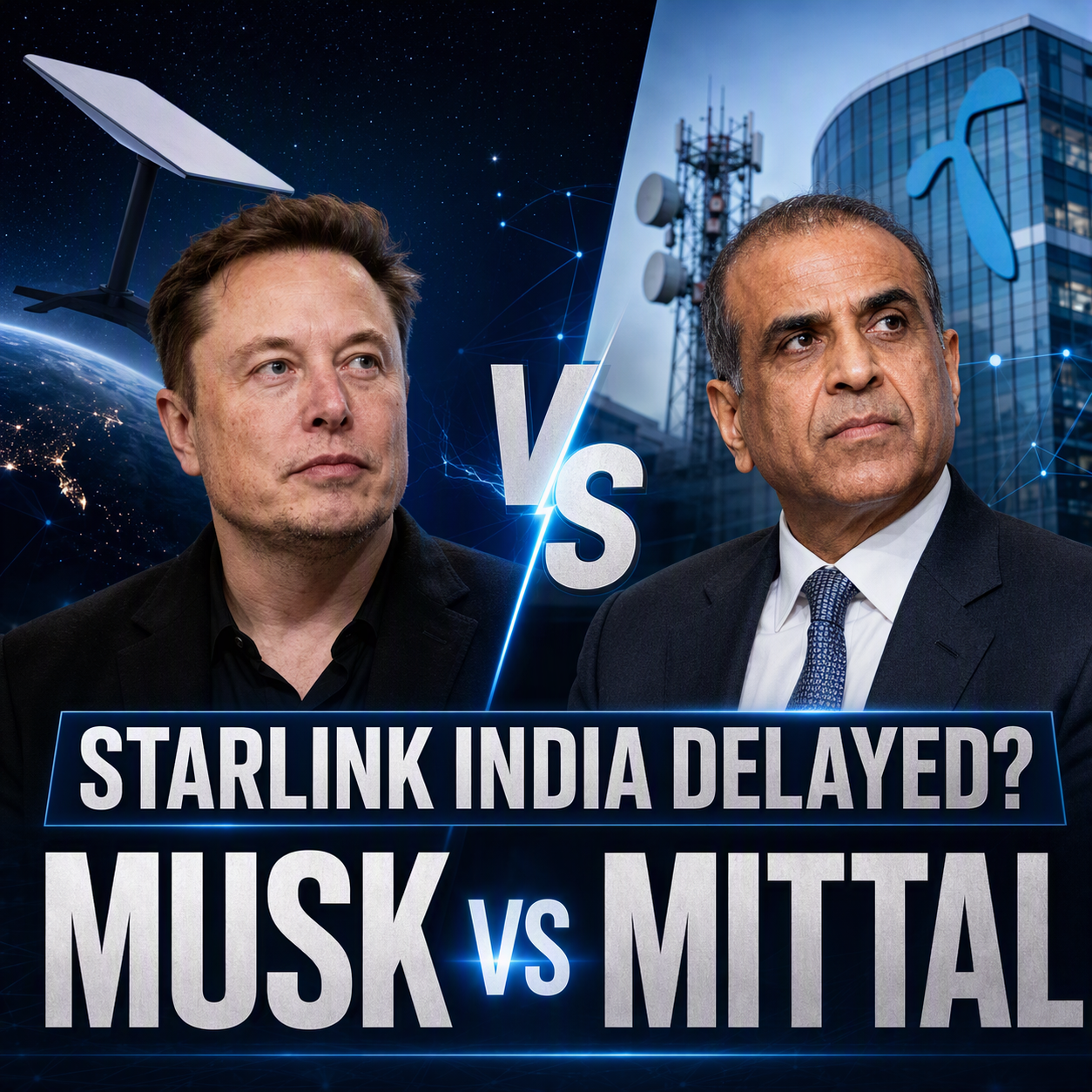
Starlink India Launch Delayed: Sunil Bharti Mittal Responds to Elon Musk Over Satellite Internet Approval
India’s internet sector is entering a new phase with the arrival of satellite-based broadband services. For millions of people living in rural areas, remote villages, mountains, islands and locations where traditional broadband infrastructure is difficult to build, satellite internet could become a major solution.
The expected launch of Starlink India, Elon Musk’s satellite internet service operated by SpaceX, has created huge interest among Indian consumers and businesses.
However, the commercial launch of Starlink services in India has been delayed due to pending regulatory approvals, including security clearance and spectrum allocation.
The delay has now become a major topic of discussion after Elon Musk raised questions about the approval process. His comments attracted attention from India’s telecom industry and government officials.
Bharti Enterprises founder and chairman Sunil Bharti Mittal responded to the discussion and explained that his company is also waiting for final permissions for satellite communication services.
Mittal highlighted that Bharti-backed satellite company OneWeb has been preparing for the Indian market for several years and has already completed major infrastructure work.
The situation has created a major competition between global and Indian players including:
- Starlink
- Eutelsat OneWeb
- Jio Satellite Communications
All companies are looking to enter India’s growing satellite broadband market.
Why Is Starlink India Launch Delayed?
Starlink has already completed several important steps required to operate satellite internet services in India.
The company has received approval from India’s space regulator Indian National Space Promotion and Authorization Centre (IN-SPACe) and obtained the required GMPCS (Global Mobile Personal Communication by Satellite) licence.
However, receiving a licence does not immediately allow a company to start commercial services.
Before launching for customers, satellite operators need to complete additional requirements such as:
- Security clearance
- Spectrum allocation
- Compliance with government regulations
- Network safety requirements
These steps are designed to ensure that satellite communication services operate securely within India’s telecom framework.
According to government officials, multiple satellite operators are following the same approval process.
Sunil Bharti Mittal Reacts to Elon Musk’s Starlink Comments
Sunil Bharti Mittal addressed the Starlink approval discussion during the Bloomberg New Economy Forum.
He explained that Bharti Enterprises has been preparing for satellite communication services for several years and has already invested in infrastructure.
According to Mittal, his company applied for approval around five years ago and has been waiting for final permissions.
He also mentioned that Bharti’s ground network preparation has already been completed.
Mittal said:
“We are all awaiting our approvals. I am significantly ahead of him in the queue. I applied five years back.”
View this post on Instagram
Bharti’s Satellite Network Preparation
Sunil Bharti Mittal explained that satellite internet services require extensive preparation before commercial operations begin.
Unlike traditional broadband networks, satellite internet depends on:
- Satellites positioned in orbit
- Ground stations
- Communication gateways
- Network management systems
Mittal said that Bharti’s satellite infrastructure has been ready for several years.
He also highlighted that the company’s satellites have been positioned to support connectivity over India.
The statement shows that the competition for India’s satellite internet market is not only about technology but also about completing regulatory requirements.
What Is Satellite Internet and Why Is India Important?
Satellite internet is a technology that provides broadband connectivity through satellites instead of only depending on underground fibre networks or mobile towers.
Traditional internet infrastructure can be expensive and difficult to deploy in:
- Remote villages
- Forest areas
- Mountain regions
- Border locations
- Disaster-affected areas
Satellite broadband can help provide connectivity in these places.
India is considered one of the world’s largest potential markets because of:
- Large population
- Growing digital economy
- Increasing demand for high-speed internet
- Expansion of online education and digital services
Companies believe satellite connectivity can support areas where conventional networks face limitations.
OneWeb’s Role in India’s Satellite Internet Market
Bharti Enterprises has invested in OneWeb, which is now part of the Eutelsat Group.
OneWeb is one of the closest competitors to Starlink in the satellite internet sector.
The company has already developed a global satellite network and has been preparing for commercial operations in India.
OneWeb focuses on several areas including:
- Enterprise connectivity
- Government communication
- Rural broadband
- Aviation connectivity
- Maritime communication
The company is also waiting for final regulatory approvals before commercial services begin.
Why Competition Between Starlink, OneWeb and Jio Matters
India’s satellite internet market is expected to become highly competitive.
Starlink brings SpaceX’s global satellite technology.
OneWeb brings Bharti’s telecom experience and satellite infrastructure.
Jio Satellite Communications brings Reliance’s large telecom ecosystem.
Competition between these companies could benefit Indian users through:
- Better internet coverage
- Improved technology
- More service options
- Competitive pricing
- Faster rural connectivity
Government Approval Process Explained
The Indian government has stated that satellite internet companies must follow the same regulatory process.
The approval process includes security checks because satellite networks involve communication infrastructure that covers large geographical areas.
The government has rejected claims that any company is being treated unfairly and said that all operators must meet the required security conditions.
Elon Musk’s Reaction Over Starlink India Launch Delay
The discussion around the Starlink India Launch became more intense after Elon Musk publicly commented about the delay in receiving final approvals for commercial operations in India.
Elon Musk, the founder of SpaceX and Starlink, has repeatedly highlighted the importance of satellite internet connectivity for people living in areas where traditional broadband services are unavailable.
According to Musk, satellite internet can help connect remote communities, improve education opportunities, support small businesses, and provide communication support during emergencies.
After Starlink’s commercial launch faced delays, Musk shared several posts on X (formerly Twitter), expressing his views about competition and internet access in India.
Elon Musk’s Comment About India’s Internet Market
In a series of posts, Elon Musk mentioned that many areas of India still do not have reliable internet connectivity.
He argued that Starlink could help bring high-speed internet access to underserved regions.
Musk wrote on X:
“There are many areas of India, as there are in all countries, with no Internet access, which denies children the opportunity for education and small businesses the opportunity to sell their goods to a global market.”
Dear Prime Minister Ambani,
Please accept my humble apologies for not realizing that you are the real boss of India.
Naturally, you would prefer to maintain your monopolistic exploitation of the great people of India, but would you nonetheless consider allowing Starlink to compete?
There are many areas of India, as there are in all countries, with no Internet access, which denies children the opportunity for education and for small businesses the opportunity to sell their goods to a global market. Starlink would change their lives for the better.
Thank you 🙏
— Elon Musk (@elonmusk) October 9, 2026
According to Musk, satellite connectivity could create new opportunities for students, entrepreneurs and communities that currently face digital limitations.
He also pointed out that satellite communication has played an important role during natural disasters in different parts of the world.
Musk’s Comment About Competition and Ambani
The Starlink approval debate became more controversial after Elon Musk mentioned Reliance Industries Chairman Mukesh Ambani in his social media posts.
Musk questioned whether established telecom companies would prefer to maintain control over India’s internet sector rather than allow more competition.
In one post, Musk wrote:
“Please accept my humble apologies for not realizing that you are the real boss of India.”
The comment created significant discussion across social media platforms and attracted reactions from technology and business communities.
However, India’s government maintained that the country does not support monopoly in any sector and that all companies must follow the same rules.
Why Elon Musk Supports Satellite Internet Competition
Elon Musk believes that increasing competition in India’s internet market can help improve connectivity and provide more choices for consumers.
Traditional telecom networks depend heavily on:
- Fibre infrastructure
- Mobile towers
- Physical network expansion
However, these methods can be challenging in difficult geographical locations.
Satellite internet provides an alternative approach because satellites can cover large areas without requiring extensive ground infrastructure.
Potential benefits include:
Rural Connectivity
Villages and remote locations can receive broadband access without waiting for traditional infrastructure development.
Education Support
Students in areas with poor connectivity may get better access to online learning platforms.
Business Opportunities
Small businesses can use reliable internet connections to reach wider markets.
Emergency Communication
Satellite networks can continue operating when traditional communication systems are damaged during disasters.
Related Video: Starlink India Controversy
OneWeb vs Starlink: The Growing Satellite Internet Competition
Starlink is not the only company interested in India’s satellite broadband market.
Bharti Enterprises-backed OneWeb is also preparing for commercial operations.
OneWeb has already developed a significant satellite network and has been working on India’s connectivity requirements.
The company is now part of the Eutelsat Group and has become one of Starlink’s closest competitors globally.
Starlink’s Business Model
Starlink mainly focuses on:
- Individual customers
- Homes
- Small businesses
- Remote users
- Mobile connectivity
The company uses thousands of low-earth orbit satellites to provide internet services.
OneWeb’s Business Model
OneWeb focuses more on:
- Enterprise customers
- Government projects
- Aviation
- Maritime services
- Remote infrastructure
Both companies use satellite technology but have different market strategies.
Jio Satellite Communications Enters The Market
Another major player preparing for India’s satellite internet sector is Jio Satellite Communications.
Reliance Jio has already transformed India’s mobile internet market through affordable data services.
The company has also entered the satellite communication sector through a partnership with Luxembourg-based SES.
Jio aims to provide high-speed connectivity using satellite technology, especially in areas where traditional networks face limitations.
With Jio, Starlink and OneWeb preparing for operations, India’s satellite internet market could become highly competitive.
How Jio Satellite Internet Could Change Connectivity
Jio already has a massive telecom ecosystem including:
- Mobile networks
- Fibre broadband
- Digital services
- Enterprise connectivity
Combining these services with satellite technology could allow Jio to provide wider coverage.
Possible users may include:
- Rural households
- Schools
- Hospitals
- Government offices
- Businesses
- Remote industries
Government Rejects Monopoly Claims
Following Elon Musk’s comments, the Indian government clarified its position regarding satellite internet approvals.
Communications Minister Jyotiraditya Scindia stated that multiple companies have received satellite communication licences.
These include:
- Starlink
- Jio Satellite Communications
- Eutelsat OneWeb
The government explained that companies must complete security assessments and follow the same regulatory framework before receiving spectrum allocation.
Jyotiraditya Scindia’s Statement on Satellite Internet
Speaking at the India Mobile Congress, Communications Minister Jyotiraditya Scindia explained that satellite communication services would operate under government regulations.
He said that spectrum allocation would be provided through a proper framework after necessary decisions were completed.
The government has maintained that India welcomes investment and competition in the satellite communication sector.
Why Spectrum Allocation Is Important for Starlink India
Spectrum is a critical requirement for any wireless communication service.
Without spectrum allocation, satellite operators cannot officially provide commercial connectivity to users.
Spectrum management helps ensure:
- Proper frequency usage
- Reduced interference
- Network reliability
- Secure communication
This is why companies must wait even after receiving initial licences.
What Happens After Final Approval?
Once security clearance and spectrum allocation are completed, satellite companies can begin commercial planning.
This may include:
- Service launch announcements
- Customer registration
- Pricing details
- Equipment availability
- Coverage expansion
Indian consumers are waiting for more information about:
- Starlink India price
- Installation charges
- Internet speed
- Availability areas
Starlink vs OneWeb vs Jio Satellite Internet: Who Can Win India’s Market?
India’s satellite internet market is expected to become one of the most competitive technology sectors in the coming years.
Currently, three major companies are preparing to provide satellite-based connectivity services:
| Company | Technology | Main Focus |
|---|---|---|
| Starlink | Low Earth Orbit Satellites | Consumer broadband, rural connectivity |
| Eutelsat OneWeb | Low Earth Orbit Satellites | Enterprise and government connectivity |
| Jio Satellite Communications | Satellite broadband network | Consumer and business connectivity |
All three companies have different strategies, but their main objective is similar — providing high-speed internet access in areas where traditional networks are difficult to deploy.
The competition between these companies could transform India’s digital infrastructure.
Starlink India: What Makes Elon Musk’s Service Different?
Starlink is operated by SpaceX and uses a large network of low-earth orbit satellites.
Unlike traditional satellite internet services that use satellites positioned much farther from Earth, low-earth orbit satellites can provide lower latency and faster response times.
Potential advantages of Starlink include:
- Faster internet connectivity
- Wider geographical coverage
- Quick deployment in remote areas
- Support during emergencies
- Connectivity without fibre cables
Starlink has already expanded services in many countries and is now looking to enter India’s growing broadband market.
However, commercial availability in India depends on completing the remaining regulatory process.
Eutelsat OneWeb: Bharti’s Satellite Internet Strategy
Eutelsat OneWeb is another major player preparing for India’s satellite internet market.
Bharti Enterprises has been closely associated with OneWeb, making it a strong competitor to Starlink.
Sunil Bharti Mittal has stated that OneWeb applied for approvals years ago and that its ground infrastructure has been prepared for several years.
OneWeb’s focus is expected to include:
- Businesses
- Government organisations
- Remote infrastructure
- Aviation sector
- Maritime connectivity
Unlike Starlink’s strong consumer focus, OneWeb has traditionally targeted enterprise-level connectivity solutions.
Jio Satellite Internet: Reliance’s Digital Expansion
Reliance Jio has already changed India’s mobile internet market with affordable data services.
Now, the company is also preparing to enter the satellite communication sector.
Jio Satellite Communications aims to combine satellite technology with Reliance’s existing digital ecosystem.
Possible advantages for Jio include:
- Existing telecom infrastructure
- Large customer base
- Strong distribution network
- Experience in affordable internet services
The entry of Jio could make the satellite internet market more competitive and potentially improve affordability for Indian consumers.
How Satellite Internet Can Change Rural India
One of the biggest advantages of satellite broadband is improving connectivity in areas where traditional networks are difficult.
Many remote locations face challenges such as:
- Lack of fibre connectivity
- Difficult geographical conditions
- High infrastructure costs
- Limited mobile network coverage
Satellite internet can provide an alternative solution.
Education
Students in rural areas could access:
- Online classes
- Digital learning platforms
- Educational resources
Healthcare
Remote healthcare centres may benefit from:
- Online consultations
- Digital medical records
- Emergency communication
Small Businesses
Local entrepreneurs could use reliable internet for:
- Online selling
- Digital payments
- Global customer access
Disaster Management
Satellite communication can remain useful during floods, storms and other emergencies when ground networks are damaged.
What Indian Consumers Can Expect From Satellite Internet?
Once commercial services begin, consumers will be interested in several factors:
Internet Speed
Users will want to know whether satellite broadband can compete with fibre broadband.
Modern satellite systems are designed to provide high-speed connectivity suitable for many online activities.
Pricing
Pricing will be a major factor in India’s price-sensitive market.
Competition between Starlink, OneWeb and Jio may influence future plans.
Availability
Initially, services may focus on:
- Remote locations
- Businesses
- Institutions
Gradually, wider consumer availability may increase.
Future of Satellite Internet in India
The future of satellite broadband in India looks promising because digital connectivity demand continues to grow.
India already has hundreds of millions of internet users, and demand for reliable connectivity continues to increase.
Satellite internet is expected to complement existing networks rather than completely replace fibre or mobile broadband.
The future telecom ecosystem may include:
- Fibre broadband
- 5G networks
- Satellite connectivity
Together, these technologies can create a more connected India.
Frequently Asked Questions (FAQ)
1. When will Starlink launch in India?
Starlink’s commercial launch date depends on completing remaining regulatory approvals, including security-related requirements and spectrum allocation.
2. Has Starlink received permission in India?
Starlink has received important approvals, including a GMPCS licence and IN-SPACe authorisation, but final commercial operations require additional regulatory steps.
3. Why is Starlink delayed in India?
The delay is linked to pending approvals and regulatory requirements before commercial satellite services can begin.
4. What did Sunil Bharti Mittal say about Starlink?
Sunil Bharti Mittal said Bharti-backed OneWeb applied earlier and has been waiting for approvals while its infrastructure is ready.
5. Who are Starlink’s competitors in India?
Major competitors include:
- Eutelsat OneWeb
- Jio Satellite Communications
6. Is satellite internet better than fibre broadband?
Satellite internet can provide connectivity in remote areas where fibre is difficult, but fibre may still offer advantages in speed and stability in cities.
7. Will Starlink be available in villages?
Satellite internet is expected to focus strongly on areas where traditional broadband coverage is limited.
8. Will Jio launch satellite internet?
Jio Satellite Communications is preparing for satellite connectivity services in India.
Final Conclusion
The debate between Elon Musk’s Starlink and India’s telecom companies highlights the growing importance of satellite internet technology.
While Elon Musk believes Starlink can help connect underserved communities, Indian telecom leaders argue that multiple companies are following the same approval process.
Sunil Bharti Mittal’s comments show that the competition is not only between companies but also about regulatory readiness and infrastructure preparation.
With Starlink, OneWeb and Jio Satellite Communications competing in the future, Indian consumers may benefit from improved connectivity options.
The arrival of satellite broadband could become an important milestone in India’s digital transformation journey.