









 Biswajoyee Barman
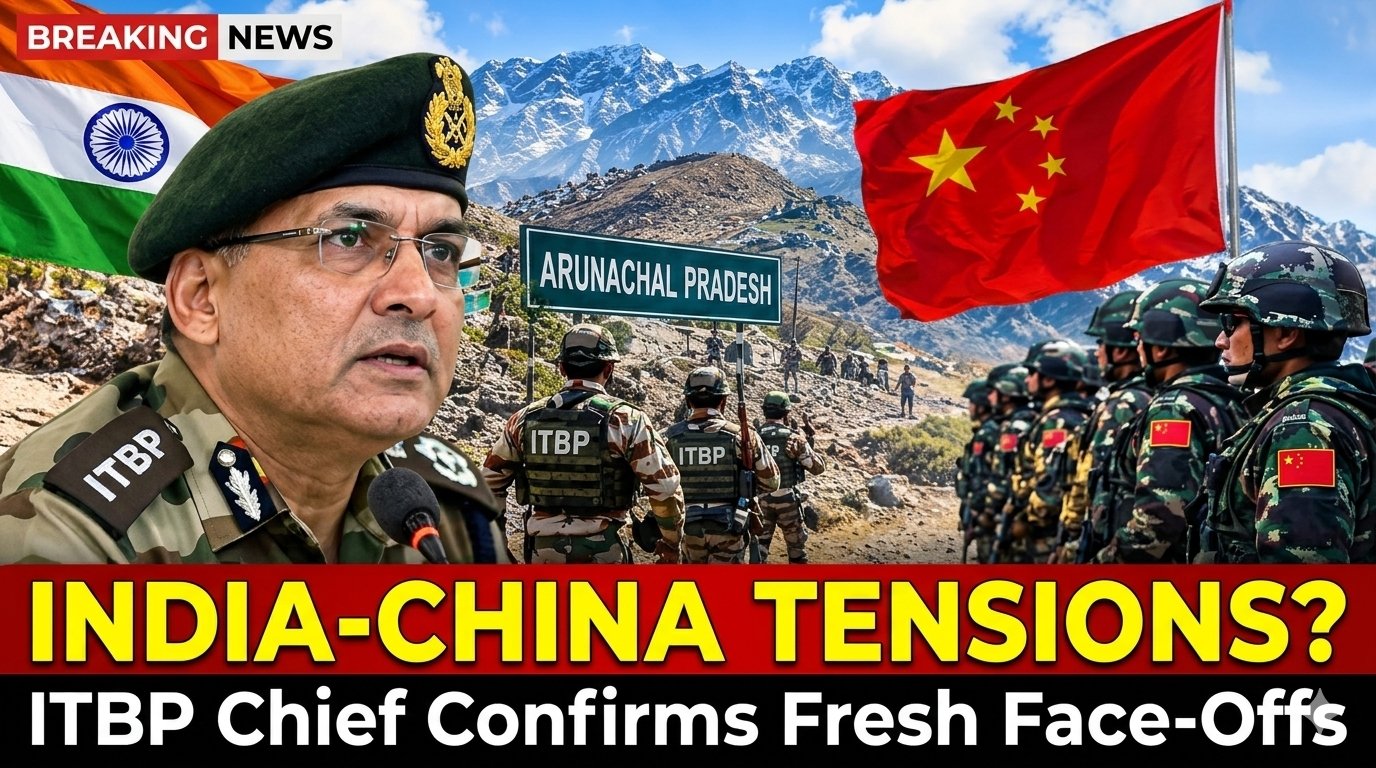
India-China Border Tensions Rise Again as ITBP Chief Confirms Face-Offs in Arunachal
Fresh concerns have emerged over India-China border tensions after the chief of the Indo-Tibetan Border Police (ITBP) acknowledged that Indian and Chinese troops have recently come face-to-face at several locations along the Arunachal Pradesh border. The statement comes at a time when both countries have been trying to improve diplomatic relations, making the latest development a significant topic of discussion among security experts and political observers.
The remarks by ITBP Director General Shatrujeet Singh Kapur have once again shifted attention to the sensitive Himalayan frontier, where border disagreements have remained a major challenge for decades. Although both governments have taken steps to reduce tensions through military and diplomatic talks, the latest confirmation suggests that the situation on the ground continues to require close monitoring.
The India-China border tensions is one of the world’s longest disputed frontiers. While both countries have strengthened communication channels over the past few years, occasional face-offs between soldiers continue to occur because the exact alignment of the Line of Actual Control (LAC) remains disputed in several sectors.
According to the ITBP chief, recent encounters between Indian and Chinese troops have taken place in different areas of Arunachal Pradesh. However, he also indicated that the security forces remain alert and prepared to deal with any situation along the border while maintaining professionalism and restraint.
The latest statement has attracted nationwide attention because it comes shortly after both India and China expressed optimism about improving bilateral relations through continued diplomatic engagement. Security analysts believe that while dialogue remains important, operational readiness along the border cannot be reduced.
ITBP Chief Highlights Operational Preparedness
Speaking at a public event in Alwar, Rajasthan, ITBP Director General Shatrujeet Singh Kapur praised the dedication and professionalism of the force deployed in some of India’s most challenging border regions.
He especially appreciated the role played by the elite Shaurya Commando teams, who are trained to operate in difficult mountain terrain under extreme weather conditions. These specialised units are responsible for responding quickly to emergencies and supporting border security operations whenever required.
The ITBP chief explained that modern border protection is no longer limited to traditional patrols. Security agencies are increasingly investing in advanced surveillance systems, drone technology and counter-drone capabilities to improve situational awareness across remote Himalayan regions.
He also stressed the importance of continuous combat training, high-altitude preparedness and technological upgrades to ensure that personnel remain capable of responding to rapidly changing situations.
Military experts note that mountainous border areas present unique operational challenges. Difficult terrain, unpredictable weather and limited infrastructure make surveillance and logistics significantly more demanding than in other regions.
Why Arunachal Pradesh Remains Strategically Important
Arunachal Pradesh continues to be one of the most strategically sensitive regions in the ongoing India-China border tensions.
India considers Arunachal Pradesh an integral part of the country, while China continues to claim parts of the state as its own territory. These differing territorial claims have remained a major source of disagreement between the two nations for many years.
Because of these competing claims, patrols from both sides occasionally encounter each other in areas where perceptions of the Line of Actual Control differ. Such face-offs generally involve military personnel asserting their respective territorial positions while following established protocols designed to prevent escalation.
In recent years, India has accelerated infrastructure development across Arunachal Pradesh by improving roads, bridges, communication systems and logistics networks. These projects aim to strengthen border connectivity and improve the mobility of security forces operating in high-altitude regions.
China has also expanded infrastructure development on its side of the border, increasing strategic competition in the Himalayan region.
As both countries continue enhancing their border capabilities, maintaining peace through military communication and diplomatic dialogue remains an important objective for regional stability.
🔍Read More: Saudi Arabia Executes Two Bangladeshis: Nazrul Islam, Siti Akhtar Death Case
Face-Offs Do Not Automatically Mean War
Although reports of recent military face-offs have generated public attention, defence experts caution against interpreting every border incident as the beginning of a large-scale military conflict.
Border encounters between India and China have occurred periodically for many years due to differing perceptions of the Line of Actual Control. In many cases, established communication mechanisms help both sides manage these situations without further escalation.
Officials have not indicated that a full-scale military confrontation is imminent. Instead, the latest developments underline the importance of maintaining vigilance while continuing diplomatic engagement.
Analysts believe that regular military-level discussions, diplomatic negotiations and confidence-building measures remain essential for reducing misunderstandings and maintaining stability along one of the world’s most sensitive international borders.
Congress Demands Clarification From the Government
Following the ITBP chief’s remarks, the issue quickly turned into a political debate. Opposition leaders, including the Congress party, asked the Central Government to provide a clear explanation regarding the reported face-offs along the Arunachal Pradesh border.
Congress President Mallikarjun Kharge questioned whether the government would brief the country on the latest developments and sought greater transparency regarding the security situation along the Line of Actual Control (LAC). The opposition argued that Parliament and the public should be informed whenever significant border developments take place.
The government, however, has not indicated that the latest face-offs represent a major escalation. Officials have continued to emphasise that border management remains an ongoing priority through military preparedness and diplomatic engagement.
MEA Reiterates India’s Position
After the ITBP chief’s statement received widespread attention, the Ministry of External Affairs (MEA) reiterated India’s long-standing position on border management.
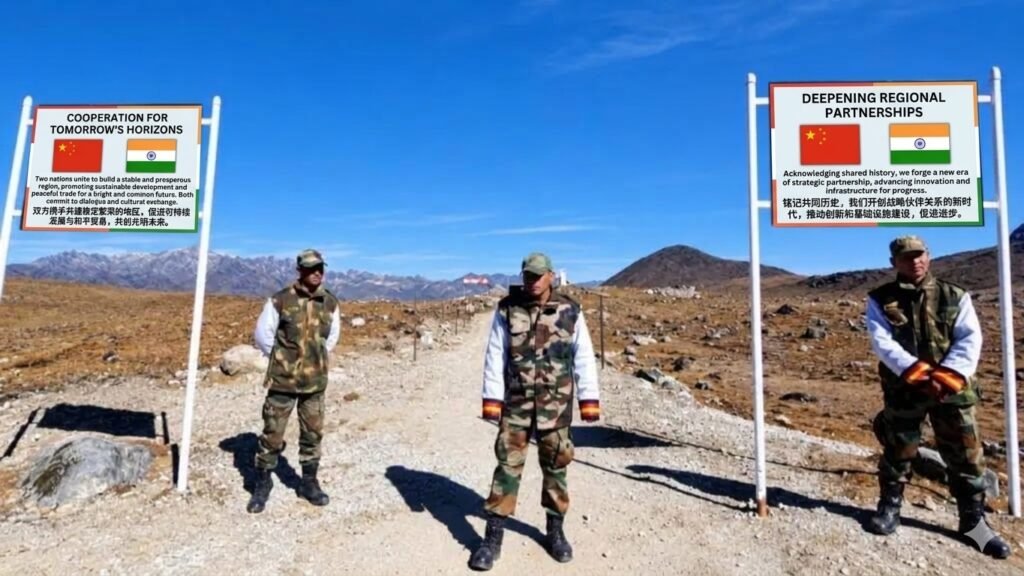
MEA spokesperson Randhir Jaiswal said that occasional friction arises when Chinese troops deviate from established patrolling patterns. He stressed that India and China continue to use diplomatic and military communication mechanisms to resolve pending issues, avoid misunderstandings and maintain peace along the Line of Actual Control.
The ministry also repeated that maintaining peace and tranquillity along the border remains essential for the overall development of bilateral relations between the two countries.
Technology Is Becoming a Key Part of Border Security
Modern border security is increasingly driven by technology rather than manpower alone.
During his address, ITBP Director General Shatrujeet Singh Kapur highlighted the growing importance of advanced surveillance systems, drones, anti-drone technology and specialised training for border personnel. He also praised the newly raised Shaurya Commandos, saying they had demonstrated their capabilities during the recent face-offs in Arunachal Pradesh.
Security analysts believe unmanned aerial systems have become critical for monitoring difficult mountain terrain where visibility and accessibility are often limited.
The use of advanced surveillance equipment allows security forces to monitor remote regions more efficiently while reducing operational risks in high-altitude environments.
Diplomatic Engagement Continues Alongside Military Vigilance
Although military tensions occasionally surface along the border, India and China continue diplomatic dialogue at multiple levels.
Military commanders from both countries regularly hold discussions aimed at reducing misunderstandings, preventing accidental escalation and maintaining stability along the disputed frontier. These mechanisms have become an important part of border management over recent years.
Experts believe that diplomacy and military preparedness are not contradictory. Instead, both approaches work together to reduce risks while protecting national security interests.
As a result, isolated face-offs should not automatically be interpreted as evidence of an imminent large-scale military conflict.
Why the Situation Matters
The India-China border tensions remain one of Asia’s most sensitive strategic regions.
Any development involving troop movements or military encounters naturally attracts international attention because both India and China are major regional powers.
Border stability influences not only defence planning but also regional diplomacy, trade, infrastructure development and investor confidence.
For this reason, even limited face-offs receive close attention from governments, security experts and international observers.
Looking Ahead
The latest confirmation by the ITBP chief indicates that border vigilance remains necessary despite recent diplomatic engagement.
India continues strengthening surveillance capabilities, improving infrastructure and modernising border forces while maintaining communication with China through military and diplomatic channels.
Whether future negotiations reduce friction will depend on continued dialogue, effective border management and mutual efforts to prevent misunderstandings along the Line of Actual Control.
Conclusion
The latest remarks by ITBP Director General Shatrujeet Singh Kapur have once again brought India-China border tensions into focus.
While reports confirm that face-offs have recently occurred at multiple locations in Arunachal Pradesh, officials have not suggested that a full-scale military conflict is imminent. Instead, India has emphasised vigilance, technological preparedness and continued diplomatic engagement.
At the same time, political reactions have intensified, with the opposition seeking greater transparency regarding the border situation. As developments continue, the Arunachal Pradesh frontier is likely to remain an important area of strategic attention for both governments and international observers.